
Thank you for Subscribing to Insurance Business Review Weekly Brief

Banorte Financial Group [BMV: GFNORTEO]
Abraham M. Izquierdo, Managing Director/Director General Adjunto, Traded & Treasury Risks
Strategic Risk Leadership in a Dynamic Financial Landscape
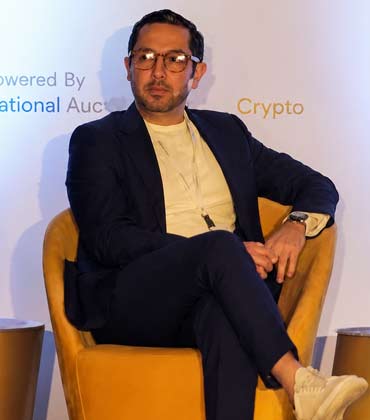
Abraham M. Izquierdo
Professional Background And Leadership In Risk Management
With over 20 years of experience in the financial sector, I have built a career spanning top-tier global and local financial institutions, allowing me to develop a comprehensive perspective on the industry. My journey began at the Mexican Stock Exchange, where I led risk management initiatives for financial derivatives, laying the foundation for my strategic approach to financial risk oversight. I subsequently held key risk management positions at JP Morgan and Scotiabank, where I deepened my expertise in capital and risk management, consolidating my knowledge in complex financial structures, modeling techniques, and local and international regulations and best practices.
Currently, I serve as Managing Director of Traded and Treasury Risks at Banorte, where I lead strategic initiatives such as the implementation of the Basel IV framework and the LIBOR/TIIE transition. My responsibilities also include overseeing capital management, liquidity risk and surveillance, as well as market, counterparty, and interest rate risk, ensuring regulatory compliance and operational excellence. My active participation in key committees—including ALCO, the Risk Policy Committee, and the Derivatives Committee—demonstrates my commitment to informed and sustainable decisionmaking.
Throughout my career, I have complemented my professional experience with a robust academic background, including an MBA from Cornell and Queen’s, an MSc in Finance, an MSc in Risk Management, the Financial Risk Manager (FRM) certification from GARP, and a Program for Leadership Development at Harvard Business School. This combination of experience, leadership, and education has enabled me not only to adapt to the evolving financial landscape but also to lead critical transformations within the organizations I have served.
Strategic Focus Of Traded And Treasury Risk Management
The strategic focus of the Traded and Treasury Risk Management team lies in safeguarding the financial group’s balance sheet while enabling sustainable growth and profitability. Our approach centers on proactively identifying, measuring, and managing the risks inherent in trading activities and treasury operations for our bank and brokerage house, as well as our mutual funds, insurance, annuities, and leasing companies. This includes capital management and calculation, FX, interest rate, liquidity, counterparty, and market risks, all of which are critical to ensuring financial performance, stability, and capital efficiency.
Our strategic value is rooted in five key pillars:
1. Capital Optimization and Regulatory Alignment
2. Fortress Balance Sheet and Profitability Enhancement
3. Risk Transformation and Innovation
4. Internal Models and Efficient Risk Processes
5. Risk Governance
Ultimately, our strategic focus is to position risk management as an enabler of the financial group’s long-term vision. By aligning risk practices with business objectives, we ensure that risk becomes a catalyst for sustainable value creation, operational resilience, and stakeholder confidence.
Regulatory And Technological Advancements In Risk Management
Regulatory and technological advancements are at the core of how we manage Traded and Treasury Risks strategically, ensuring that the financial group remains resilient, competitive, and compliant in an increasingly complex financial landscape.
From a regulatory perspective, the adoption of Basel and RFR frameworks represents a significant milestone. Our team leads these initiatives by developing advanced internal models that ensure accurate risk capture and capital optimization, as well as state-of-theart technology implementations.
On the technological front, digital transformation is emerging as a critical driver in how we manage risks. Advanced analytics, machine learning, and real-time data processing are powerful tools that enhance risk modeling. Cloud-based solutions have also improved the scalability and flexibility of our risk infrastructure, ensuring that we can adapt quickly to market and regulatory changes.
By Aligning Risk Practices With Business Objectives, We Ensure That Risk Becomes A Catalyst For Sustainable Value Creation, Operational Resilience, And Stakeholder Confidence.
In summary, by staying ahead of regulatory expectations and embracing technological innovations, we ensure that our risk management framework is not just a defensive mechanism but a key enabler of sustainable value creation for the financial group.
Challenges And Strategic Responses In Risk Management
In today’s financial landscape, managing Traded and Treasury Risks involves navigating complex challenges that require a strategic, adaptive, and forward-looking approach. Below are some key challenges and strategies for effective risk management:
A. Market Volatility And Geopolitical Risk
Our risk management approach focuses on real-time monitoring, scenario analysis, and stress testing. By utilizing advanced models and analytics, we can anticipate market shifts and recalibrate our hedging strategies swiftly. Additionally, maintaining a diversified trading/banking book, robust liquidity buffers, and a fortress balance sheet allows us to absorb market shocks while continuing to meet business objectives.
B. Evolving Regulatory Landscape
Our risk management strategy includes proactive planning for regulatory requirements and industry best practices. By engaging with regulators, global peers, and industry groups, we stay ahead of upcoming changes, allowing us to adapt swiftly and turn compliance into a competitive advantage.
C. Technological Disruption
We invest in robust, scalable technology platforms with time-tomarket capabilities and end-to-end workflows. Additionally, we implement integrated and robust measures to protect sensitive trading and treasury data.
D. Liquidity Risk In A Tightening Monetary Environment
Our liquidity management strategy focuses on optimizing funding structures, stress-testing liquidity positions under various scenarios, and maintaining strong liquidity coverage and net stable funding ratios. We also leverage transfer pricing mechanisms to align liquidity costs with business activities, ensuring proactive liquidity risk management across the group.
Advice For New Professionals In Risk Management
Given the rapidly evolving financial landscape, my advice to new professionals entering the field of risk management is to adopt a mindset of continuous learning, strategic thinking, and adaptability. The financial sector is undergoing significant transformations driven by technological advancements, regulatory reforms, and shifting market dynamics. To succeed in this environment, aspiring risk managers should focus on:
A. Mastering the Fundamentals of Risk Management
A strong foundation in market, credit, liquidity, and operational risks is essential.
B. Embracing Technology and Data Analytics
Leveraging machine learning, AI, and big data will be critical in future risk assessment.
C. Developing a Strategic and Business-Oriented Mindset
Understanding risk from a business growth perspective allows for more effective decision-making
D. Cultivating Strong Communication and Leadership Skills
The ability to convey complex risk insights to stakeholders is vital.
E. Staying Agile and Open to Change
The financial sector is dynamic, requiring flexibility and adaptability.
F. Seeking Mentorship and Building a Strong Professional Network
Learning from industry leaders and peers accelerates professional growth.
Conclusion
In conclusion, my key advice is to view risk management as both a science and an art—grounded in quantitative rigor but driven by strategic foresight. By combining technical expertise, technological proficiency, strategic thinking, and strong leadership, new professionals can play a pivotal role in shaping the future of risk management.
The articles from these contributors are based on their personal expertise and viewpoints, and do not necessarily reflect the opinions of their employers or affiliated organizations.
