
Thank you for Subscribing to Insurance Business Review Weekly Brief

Oakbridge Insurance
Clayton Matthews, Director of Strategic Claims Advocacy
Retaining Human Judgment in Modern Claims Leadership
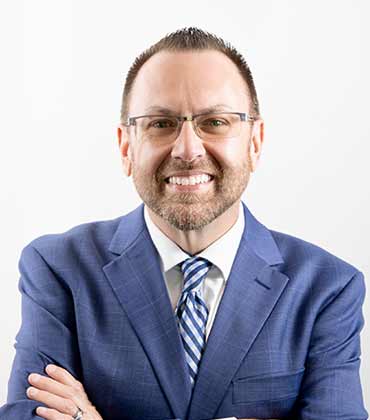
Clayton Matthews
Clayton Matthews, Director of Strategic Claims Advocacy at Oakbridge Insurance, brings more than three decades of leadership experience to the evolving discipline of modern claims management and advocacy. His work focuses on ensuring contractual accuracy with a claims experience that builds long‑term trust between insurers, policyholders and our agency partners. Matthews leads strategic claims advocacy, operational improvement initiatives and complex loss consulting while helping clients control loss costs, strengthen claim outcomes and protect long‑term enterprise value.
In this conversation with Insurance Business Review, Matthews discusses the leadership principles guiding his approach to claims management and advocacy in an increasingly automated environment. His philosophy centers on improving operational performance while maintaining a culture grounded in service, empathy and disciplined financial stewardship—using technology to support decision‑making without replacing human judgment.
Defining Modern Claims Strategy
Two principles have shaped my entire claims career: empathy in customer service and disciplined financial stewardship. Those two elements form the foundation of effective claims leadership.
Insurance is something nearly everyone needs, yet few people enjoy thinking about. When a loss occurs, it often coincides with one of the most stressful moments in a policyholder’s life. In that moment, the claims professional has a rare opportunity to either reinforce trust or erode it. The way we communicate, explain coverage and guide the insured through the process can turn a difficult event into the beginning of a long‑term relationship. Because what clients really care about in claims is shaped by factors that the traditional core metrics miss. A heartfelt apology, a moment of connection, or a kind word. You won’t find any of those goals in your dashboard. But, whether you realize it or not, your customers are judging you on those factors.
Financial discipline matters just as much. Claims decisions ultimately sit at the intersection of policy language, legal responsibility and financial accountability. Our job as leaders is to ensure compliance. But when we focus only on numbers and reserves, we risk forgetting that each claim represents someone’s livelihood, property or future. Effective claims leadership requires balancing empathy with contractual clarity. The best claims organizations consistently deliver both.
Driving Operational Efficiency without Losing Humanity
Operational efficiency begins with people. Adjusters are the engine of every claims organization, and hiring the right individuals is the most important decision leadership makes. A single weak link does not only impact productivity—it affects service quality, morale and ultimately the reputation of the organization.
In claims, work never truly disappears. When one adjuster falls behind, the ripple effect spreads across the team. That is why placing the right people in the right roles is essential. When individuals are positioned where their strengths align with their responsibilities, both the employee and the organization perform at their highest level.
I also believe strongly in empowerment. Claims professionals must have the authority to apply judgment. We operate within regulations and procedures, but claims is still as much an art as it is a science. Two claims that appear identical on paper can unfold very differently because people, circumstances and motivations differ.
Micromanagement is one of the fastest ways to undermine a claims organization. Adjusters who feel trusted and supported perform far better than those whose decisions are constantly second‑guessed. I challenge leaders to never lose focus on your objective. Measure intently on core goals and objectives. Execute the plan. Manage in a way as to exceed expectations. Seek client feedback. Refine and repeat.
At the same time, claim professionals need strong support systems and that includes associates knowing that managers and leaders have their back. Adjusters regularly navigate emotionally charged situations where they may be blamed for circumstances beyond their control. Our responsibility is to remain composed, apply the policy fairly and treat every person with dignity.
One of the most important lessons I share with adjusters is to separate personal attacks from situational frustration. A policyholder who is upset is often reacting to stress or uncertainty. Understanding that dynamic helps maintain professionalism while still delivering empathetic service.
Technology as an Enhancer, Not a Replacement
Over the course of my career, the industry has repeatedly predicted the end of the claims adjuster. Driverless vehicles were supposed to eliminate auto claims professionals. Satellite roof measurement technology was predicted to replace property adjusters. Today, artificial intelligence is often described as the next force that will make adjusters obsolete.
Yet the opposite has happened. The more complex the tools become, the more valuable experienced professionals are in interpreting results and making sound decisions.
Technology absolutely has a role. The most valuable tools are those that increase transparency and workflow visibility rather than those adopted simply because they appear innovative.
The real opportunity lies in automation that removes administrative burden. Tasks such as intake processing, document organization and status tracking can be streamlined through technology, allowing adjusters to spend more time on complex claims that require judgment, negotiation and context.
The objective should never be to replace human judgment. The goal is to elevate it.
Leadership Built on Credibility and Composure
Leadership in is not granted by title; it is earned through credibility. If a leader cannot confidently explain or defend a tough decision, it becomes difficult for the team to trust that leadership.
For professionals stepping into leadership roles, preparation and steadiness matter more than authority. Teams reflect the tone of their leaders. If leadership reacts emotionally, the organization reacts emotionally. If leadership remains measured and thoughtful, the team follows that example. Calm clarity builds trust and stability.
“Claims is as much an art as a science. Two claims may look similar on paper, yet because people are involved, outcomes and contexts differ.”
I often describe my leadership style as the duck on the water. Above the surface everything appears steady and composed, while beneath the surface I am working relentlessly to keep the organization moving forward.
Ultimately, what sustains long‑term success in claims leadership is composure, optimism and disciplined decision‑making—combined with the humility to recognize when better ideas emerge.
The articles from these contributors are based on their personal expertise and viewpoints, and do not necessarily reflect the opinions of their employers or affiliated organizations.
