
Thank you for Subscribing to Insurance Business Review Weekly Brief

HUB International – Ontario & Atlantic
Matthew T Studley, Chief Operating Officer
Redefining Complex Risk through Experience and Strategy
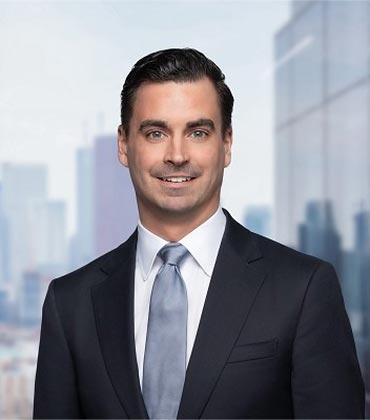
Matthew T Studley
Matthew T. Studley is the newly appointed Regional Chief Operating Officer at HUB International, overseeing operations across Ontario and Atlantic Canada. With over a decade of experience spanning financial services, complex risk management, and specialty insurance lines, Studley brings both strategic vision and deep technical expertise to his leadership role. Prior to this, he led HUB's Complex Risk vertical and built out key offerings in D&O, financial institutions, and high-networth advisory services.
The Career Journey
I recently stepped into the role of Regional COO, and while it’s only a few weeks old, it’s an exciting opportunity that I’ve embraced. This role didn’t exist in our region before, so I’m focused on shaping what operational leadership should look like across Ontario and Atlantic Canada.
Before this, I led our Complex Risk vertical, which was designed to support high-end, risk-managed accounts—whether they were publicly traded companies or upper mid-market private firms. Over the years, we’ve built a team of experts across multiple lines of business, from P&C, D&O, trade credit, and M&A insurance to cyber, marine cargo, environmental, and other specialty areas.
Going further back, I also headed our D&O and financial institutions team. And before joining HUB in 2011, I spent five years in investment analytics with one of Canada’s major banks. That background helped me launch and grow HUB’s financial services portfolio here in Canada. That has been my journey, and now I’m excited to help drive operational scale and innovation in my new capacity.
A Shifting Baseline in Climate
One of the biggest challenges on the broker and insurer side is getting access to better climate data. Climate change and inconsistent weather patterns have introduced greater volatility to legacy data models, making many of the inputs we historically relied on less relevant—or at least more unpredictable.
Events like the California wildfires and the increasing frequency of tornadoes have made it harder to produce accurate future projections, simply because we don’t have enough relevant historical data to draw from.
We’re also seeing more aggregate risk, where multiple lines—homeowners, auto, fine art, and so on—can be affected simultaneously. Similarly, regulatory shifts and social inflation amplify volatility in pricing and coverage. The result is that outdated assumptions no longer support accurate pricing, capital allocation, or underwriting decisions. Brokers and carriers alike need better data and more dynamic modeling tools. I believe that’s the space where we’ll see meaningful innovation.
The Role of AI in the Sector
The first area where AI can have real impact is in the SME and standard personal lines space, where it can meaningfully automate high-volume, low-complexity workflows. This includes faster quoting, automated document generation, data scraping, and customer self-service. These are commoditized segments where speed and cost-efficiency are critical, and AI can significantly reduce the need for human involvement—at least for routine tasks. Over time, this could reshape how brokers interact with clients in these lines, potentially leading to leaner models and lower service costs.
But the real opportunity, in my view, lies in the complex risk and advisory space—the kinds of accounts where clients need customized strategies, multi-line placements, and deep domain expertise. Here, I see AI functioning more as augmented intelligence than pure automation.
Work hard and stay curious, and be realistically patient with your career. One of the best things you can do early on is find a strong mentor someone who’s been through market cycles, handled complex scenarios, and wants to tea.
For brokers managing sophisticated portfolios, AI tools can handle repetitive, low-value tasks—like document summarization, public data analysis, report generation, and even some aspects of compliance preparation. The value here isn’t about replacing the broker; it’s about elevating them—freeing up time and mental bandwidth so experienced professionals can focus on higher-order client conversations, strategy, and problem-solving.
Progress and Pitfalls of Parametric Insurance
Parametrics are gaining traction, but there’s still a lot of work to do. One of the biggest hurdles is client education. While the concept is simple—and policies pay out based on a trigger like wind speed or rainfall—many clients haven’t seen parametrics in action or don’t fully understand how they apply to their operations.
Compounding this is the issue of basis risk. If the wrong data source is used to trigger a contract, or if the data is ambiguous, payouts may not occur when expected. That’s a public relations challenge, and it could slow adoption. When clients hear success stories about contracts triggering cleanly and paying out quickly, parametrics gain broader acceptance. But when negative stories dominate—such as trigger failures or communication breakdowns—it can skew perception and stall momentum.
Adding to the complexity is the wide range of stakeholders involved. From governments and lenders to contractors, insurers, and policyholders, alignment is critical. Everyone needs to understand how these contracts work and what they’re designed to do. The more parties involved, the harder that coordination becomes—but without it, scaling parametrics will remain a challenge.
Reinsurance Realities and Industry Risks
While I operate on the retail side, the ripple effects of the reinsurance market are very real. After Hurricane Ian, reinsurance pricing spiked—especially during the 2023 renewal season. There’s more capital now, which helps, but there’s a growing disconnect between market realities and some government pricing regulations—particularly in high-risk states like Florida and California.
If insurers can’t price appropriately, they’ll start pulling out or altering terms through higher deductibles or coinsurance clauses. That reduces supply at a time when consumers need more options. I understand that governments are trying to protect consumers, but if pricing is restricted too much, it could push more risk onto state-run insurers and, eventually, taxpayers. That’s a tough balance.
Looking five to ten years out, the talent gap worries me most. Many of the industry’s senior professionals are retiring, taking decades of institutional knowledge with them. Even with mentoring and knowledge transfer, it’s hard to compress 40 years of expertise into a few. That loss can lead to contract uncertainty, inconsistent interpretation, and broader counterparty risk.
Add to that the ongoing redrawing of global trade dynamics, political shifts, and supply chain fragility, and it creates real risk. Our job is to help clients navigate that uncertainty—and to do that well, we need experienced people and evolving tools.
Advice for Upcoming Professionals
My advice to upcoming professionals is: work hard, stay curious, and be realistically patient with your career. One of the best things you can do early on is find a strong mentor— someone who’s been through market cycles, handled complex scenarios, and wants to teach.
I’m not a fan of job-hopping just to chase the next shiny thing. Insurance is a long-game industry. It rewards consistency, expertise, and relationships. Make deliberate choices, surround yourself with good people, and focus on learning—especially in your first 10 years. That foundation will pay dividends over time.
The articles from these contributors are based on their personal expertise and viewpoints, and do not necessarily reflect the opinions of their employers or affiliated organizations.
