

Thank you for Subscribing to Insurance Business Review Weekly Brief

Voya Financial
Tenzie Wilson, Vice President of Group Underwriting
Fear-Based Underwriting and How It Can Have the Opposite Effect
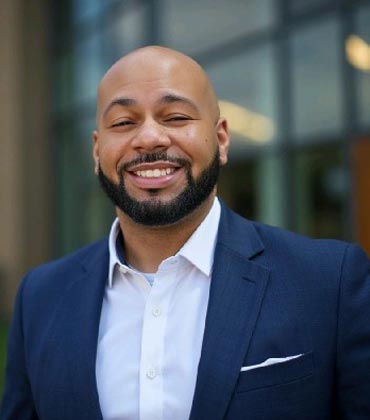
Tenzie Wilson
Many insurance professionals are currently striving to get a solid grasp on where the market is trending. The biggest question hanging over the industry is whether the uptick in claims over recent years is a temporary spike of volatility or a permanent upward trend. Depending on which side of the fence you sit on, your strategy for weathering the storm will look quite different.
However, a critical thread unites both strategies at the fundamental level: the absolute necessity of avoiding a fear-based approach to risk management.
Underwriting methodologies and philosophies are historically rooted in analyzing consistent, clean data to support rational decision-making. To truly understand patterns of claim utilization, evaluating hard data to assess prospective risk is crucial. A successful, sustainable underwriting philosophy requires the ability to maintain steady, stable pricing centered around long-term market inflation.
It should not chase short-term volatility.
When Fear Drives the Pen
When underwriters lack access to clean data, intuition is replaced by apprehension. This lack of information injects a natural, fear-based approach into the evaluation process. Pricing becomes misguided, which rapidly compromises an insurance company’s competitive edge, ultimately crippling growth and retention targets.
These missteps are not easily corrected; they can take years of significant effort and financial drag to recover from.
When fear-based underwriting takes over, carriers usually default to overpricing risk to "play it safe." But this triggers the opposite of the intended effect, a phenomenon known as adverse selection.
• The Clean Risks Leave: Your healthiest, lowest-risk clients will shop the market and leave for competitors who price risk accurately.
• The High Risks Stay: The clients with high utilization remain because they cannot find better rates elsewhere.
Consequently, the carrier is left with a highly concentrated pool of bad risk, forcing rates even higher. By trying to protect the bottom line out of fear, the underwriter inadvertently destroys it.
The Modern Battleground: Specialty Drugs
Data evaluation is the foundation of the underwriting process, allowing professionals to balance science and art to measure prospective risk. This is why clean, consistent data is more important than ever.
When fear drives underwriting decisions, carriers often end up creating the very risks they are trying to avoid.
In a market where access to data should be easier due to modern technology, many carriers prospecting for new business still struggle to obtain the basic information they need.
This gap is particularly dangerous in today's market, where trend lines are dominated by an influx of million-dollar-plus claims, driven primarily by high-cost specialty drugs and gene therapies. Without granular data on a group's specific specialty drug pipeline, a carrier cannot price with precision.
Bridging the Gap: Moving Forward
Fear is not a strategy. Figuring out how to bridge the gaps left by missing data is.
Forward-thinking insurance companies are building and adopting predictive modeling solutions to stratify risk. These tools allow them to gain a better handle on emerging threats even when historical data is thin.
As the market continues to stabilize post-pandemic, the ultimate takeaway for carriers is clear: staying true to disciplined risk evaluation—not defensive positioning—is the only true guiding star to weather the storm of market volatility.
Disclaimer: The views, thoughts, and opinions expressed in this article belong solely to the author and do not necessarily reflect the official policy, position, or views of any past, present, or future employer, organization, committee, or other group or individual.
The articles from these contributors are based on their personal expertise and viewpoints, and do not necessarily reflect the opinions of their employers or affiliated organizations.
