
Thank you for Subscribing to Insurance Business Review Weekly Brief


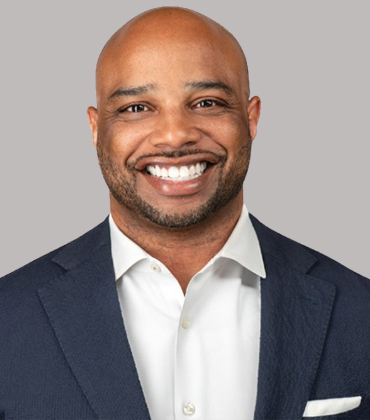 Adrian Davis, Principal Owner
What challenges make recruiting in the insurance industry more complex than standard hiring processes?
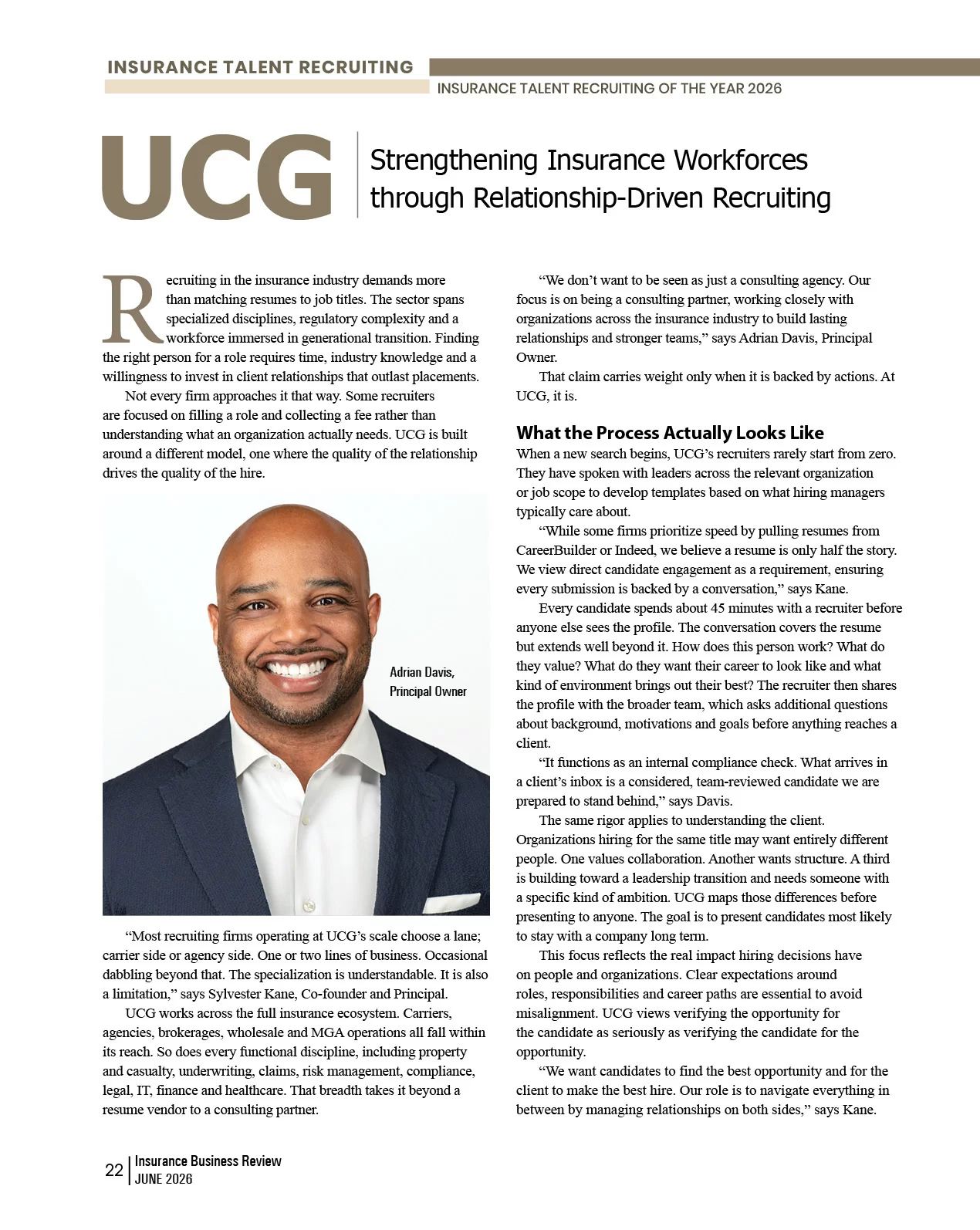
Recruiting in the insurance industry demands more than matching resumes to job titles. The sector spans specialized disciplines, regulatory complexity and a workforce immersed in generational transition. Finding the right person for a role requires time, industry knowledge and a willingness to invest in client relationships that outlast placements.
Not every firm approaches it that way. Some recruiters are focused on filling a role and collecting a fee rather than understanding what an organization actually needs. UCG is built around a different model, one where the quality of the relationship drives the quality of the hire.
“Most recruiting firms operating at UCG’s scale choose a lane; carrier side or agency side. One or two lines of business. Occasional dabbling beyond that. The specialization is understandable. It is also a limitation,” says Sylvester Kane, Co-founder and Principal.
UCG works across the full insurance ecosystem. Carriers, agencies, brokerages, wholesale and MGA operations all fall within its reach. So does every functional discipline, including property and casualty, underwriting, claims, risk management, compliance, legal, IT, finance and healthcare. That breadth takes it beyond a resume vendor to a consulting partner.
“We don’t want to be seen as just a consulting agency. Our focus is on being a consulting partner, working closely with organizations across the insurance industry to build lasting relationships and stronger teams,” says Adrian Davis, Principal Owner.
That claim carries weight only when it is backed by actions. At UCG, it is.
What the Process Actually Looks Like
How does UCG’s candidate evaluation process ensure deeper alignment beyond resumes and qualifications?
 Sylvester Kane, Co-founder and Principal
“While some firms prioritize speed by pulling resumes from CareerBuilder or Indeed, we believe a resume is only half the story. We view direct candidate engagement as a requirement, ensuring every submission is backed by a conversation,” says Kane.
Every candidate spends about 45 minutes with a recruiter before anyone else sees the profile. The conversation covers the resume but extends well beyond it. How does this person work? What do they value? What do they want their career to look like and what kind of environment brings out their best? The recruiter then shares the profile with the broader team, which asks additional questions about background, motivations and goals before anything reaches a client.
“It functions as an internal compliance check. What arrives in a client’s inbox is a considered, team-reviewed candidate we are prepared to stand behind,” says Davis.
The same rigor applies to understanding the client. Organizations hiring for the same title may want entirely different people. One values collaboration. Another wants structure. A third is building toward a leadership transition and needs someone with a specific kind of ambition. UCG maps those differences before presenting to anyone. The goal is to present candidates most likely to stay with a company long term.
This focus reflects the real impact hiring decisions have on people and organizations. Clear expectations around roles, responsibilities and career paths are essential to avoid misalignment. UCG views verifying the opportunity for the candidate as seriously as verifying the candidate for the opportunity.
“We want candidates to find the best opportunity and for the client to make the best hire. Our role is to navigate everything in between by managing relationships on both sides,” says Kane.
After the Placement
Why does ongoing engagement after placement matter for long-term hiring success and retention?
Recruiters stay in contact with placed professionals and check in with hiring leaders to ensure expectations remain aligned. They uncover issues before they become expensive ones. Buyer’s remorse is addressed before it solidifies.
-
Most recruiting firms operating at UCG’s scale choose a lane; carrier side or agency side. One or two lines of business. Occasional dabbling beyond that. The specialization is understandable. It is also a limitation.
“The balance here is deliberate. Staying in contact is not the same as positioning a placed candidate for the next move. Clients need to trust that we are invested in the success of the hire, not just focused on the next fee,” says Davis.
Over time, that trust produces its own returns. A candidate who lands well, a shorter commute, a higher salary, a better trajectory, points peers toward UCG. A client who gets three strong hires before the end of Q2 comes back for help with the next three. Both are expressions of the same thing; a relationship that delivered.
When something goes wrong, the response is the same regardless of the engagement’s size. The team addresses it directly and looks internally at what the process missed. A $50,000 placement receives the same level of intensity as a $300,000 placement.
The Workforce the Industry is Heading Into
In what way is generational workforce change influencing hiring and communication expectations in insurance?
UCG recruits for an industry where more people leave than enter. The professionals coming in grew up more comfortable with screens than with rooms, more fluent in tools than in conversations. AI is accelerating that gap, not closing it.
The real challenge is not teaching people to use AI, but developing strong people skills alongside it. The most important challenge to overcome is not learning to use AI, but to hone people skills. The ability to read a room, build trust and communicate with precision and warmth is what insurance runs on. A tool that handles research and operational efficiency is useful. A professional who can walk into a room and earn confidence is rare.
That awareness shapes how UCG works with candidates. The pace of change has created a specific kind of professional disorientation. A candidate with several years of solid, but recent experience, may feel genuinely uncertain about in-person interview expectations, what to wear, how early to arrive, what the unspoken signals mean. That is what happens when an entire generation of early career experience takes place through a screen. UCG’s recruiters recognize it and navigate it with candidates rather than past them.
To keep pace with the broader landscape, UCG invests in team development. Recruiters pursue industry certifications, expand their knowledge of emerging technologies and deepen fluency in the roles and disciplines they recruit for. The standard is a recruiter who understands the technical landscape and the human dynamics equally well.
Why UCG Exists
Kane worked at enough agencies to see how recruiters are treated, like numbers, throughput or the means to someone else’s margin. UCG was founded on the belief that the people who work there should be treated as business partners, not employees.
“If you treat partners well, they stay. If they stay, they grow. If they grow, the work improves,” says Kane.
That belief shows up in practice. When a team member expressed interest in developing expertise in executive coaching, she was supported in completing insurance certifications and education to pursue that path internally.
That belief extends outward. UCG attends industry conferences, participates in initiatives such as RISE, sponsors scholarships and supports continuing education for professionals pursuing industry certifications. It’s one of the reasons it was selected as the Insurance Talent Recruiting Firm of the Year 2026.
“Built on relationships, powered by people,” says Davis.
That is the standard UCG sets for itself, and one that the insurance industry increasingly needs for trustworthy team building.
Building the Next Insurance Workforce
Insurance leadership teams face a structural workforce transition that extends beyond routine hiring cycles. A large cohort of experienced professionals is retiring while carriers, brokerages and agencies expand into areas such as digital distribution, analytics and regulatory complexity. Talent acquisition in this environment cannot rely on transactional recruiting models that simply match resumes to job descriptions. Organizations building insurance teams increasingly require recruiting partners that understand industry dynamics, role specialization and cultural factors that determine whether a hire succeeds long after the offer letter is signed.
Insurance remains a relationship-centered business despite rapid technological change. Hiring strategies depend on recruiters with direct industry exposure rather than on job boards or automated sourcing. Conferences, professional associations and continuing education initiatives often serve as environments where future hires and hiring leaders interact. Recruiters embedded in these ecosystems develop a clearer view of the evolving workforce and can advise clients on market realities rather than presenting a list of available candidates.
Depth of industry fluency also matters. Insurance organizations often search for talent across carriers, agencies, brokerages, MGAs and specialty lines. Recruiters operating within a single segment can struggle to interpret how experience transfers across the broader ecosystem. Firms that demonstrate working knowledge of day-to-day roles, regulatory responsibilities and distribution structures are better positioned to assess whether a candidate’s background will translate into real performance. Hiring decisions rarely hinge on title equivalence alone; they depend on how responsibilities differ across organizations.
Human evaluation remains central to effective recruiting. Cultural compatibility often determines whether a new hire thrives or exits early. Strong recruiters invest time in understanding both sides of a placement: the organization’s expectations and the candidate’s long-term goals. Extended conversations with candidates reveal motivations, leadership style and professional priorities that do not appear on resumes. Insurance executives increasingly expect recruiting partners to surface these qualitative factors before candidates reach the interview stage.
Long-term engagement after placement separates thoughtful recruiting firms from transactional intermediaries. When recruiters maintain communication with both the hiring company and the placed candidate, they gain early visibility into potential concerns and help prevent misalignment from developing into a failed hire. Consistent follow-up strengthens trust within professional networks. Successful placements often generate referrals from both clients and candidates, creating a cycle that expands reach across the insurance market.
Within this landscape, UCG Staffing stands out through its focus on relationship-centered recruiting and broad insurance market coverage. The firm operates across multiple segments of the insurance ecosystem rather than limiting itself to a single niche, allowing it to advise carriers, agencies and brokerages with a broader market perspective. Its recruiters invest significant time with candidates before presentation, typically conducting in-depth conversations to assess technical capability, personal motivations and long-term career goals.
Candidate profiles undergo internal review before reaching a client, ensuring that hiring leaders receive individuals who have been evaluated through both recruiter assessment and team-level validation.
The firm maintains ongoing communication with both clients and candidates after placement, reinforcing accountability and supporting long-term hiring outcomes. Its model reflects a consultative approach that prioritizes relationship-building, market insight and alignment between organizations and talent.
Through this combination of industry immersion, structured evaluation and sustained engagement, UCG Staffing demonstrates the qualities that define a strong partner for insurance organizations building the next generation of talent.
...Read more
